
Elder Check-In: Keeping Your Parent Cyber-Safe
Stéphanie Bringloe
An important and sometimes dismissed aspect of cybersecurity is how we talk about it with our elders. They are a vulnerable sector of our communities -- and threat actors are well aware of this vulnerability.
When you talk to your aging parents/grandparents about technology in general, what tends to be their response? "Ah, I don't understand any of it," or "Ah, not all this mumbo jumbo again!" are most likely within the wheelhouse.
This is unfortunately precisely the attitudes and perceptions threat actors are aiming for.
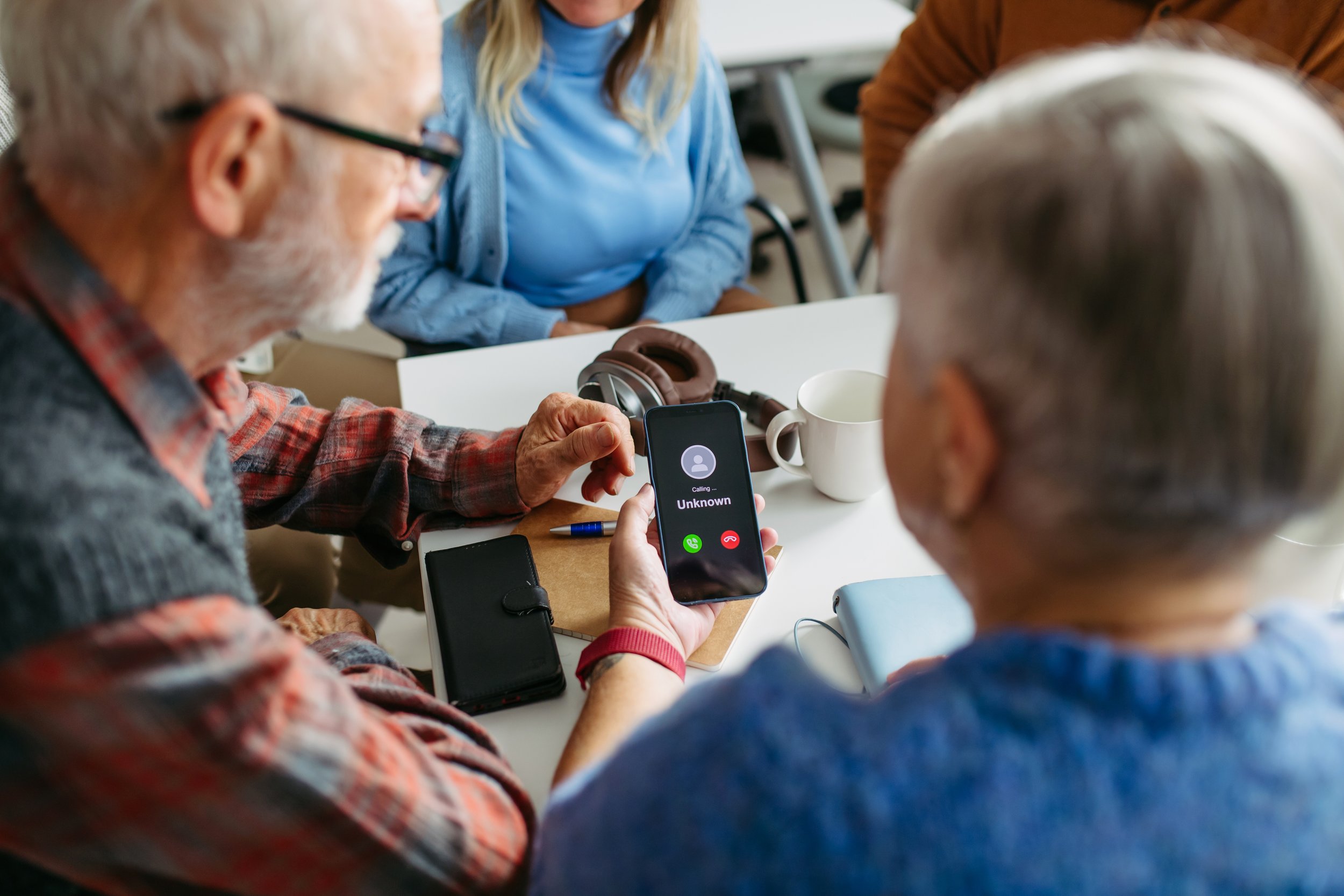
Consider talking to your parents/grandparents from a place of empathy.
You may very well be used to the speed at which technology moves, but they are not – and for a good reason. In the last 10 years of their lives, technology (and resulting cyber threats) has evolved many times faster than what they had witnessed before. It's no wonder they might feel a little lost! And of course, we have to add to this the advent and exponential growth of AI; the sophistication and sheer number of cyber threats that AI has empowered can be overwhelming for anyone, let alone someone who might not understand it or know how to recognize it.
It is important to remember this perspective: no one likes to be told that they have been doing something wrong or unsafely, or that they lack a skill that they should have adopted already.
No one wants to have someone shine an embarrassing bright light on a lack of "know-how" in any topic, let along something as important as online safety.
That’s particularly true when we’re trying to teach something to the people who once taught us.
Adult learners like to know WHY they should learn something; so, begin with explaining the WHY before getting to the WHAT.
WHY
It's important to learn how to protect yourself from cyber threats to safeguard your personal data which can be hacked, stolen, or used against you.
Your banking account, your social media accounts, your email account… they all store your private information online, and you are the main point of access to each of these. So, people who want to harm you will try to get to your information through you.

WHAT
Here are the four main things you can do to stay safe from cyber threats.
If something is too good to be true (an awesome deal, huge savings, etc.) it most likely is. Talk to someone you trust and confirm before clicking on any link/image/promotion; they could compromise your devices or accounts. Even just explaining a deal out loud can help you realize something may be sketchy.
If you appear to get a call from someone you know, asking you (for example) for money, tell them you’ll call them back. Hang up, take a minute, then call this person directly, yourself. That way you can confirm if it was really them, or if someone is trying to get some money from you.
If something is pressuring you to act fast, be careful! Scams often need you to act fast because it is when you SLOW DOWN that you might notice the signs that they are in fact trying to fool you.
Never use the same password in more than one place and always use long and complicated passwords. Can't keep track of them all? Not many can. This is why we use a password manager. If you need to write your passwords down, make sure you keep them in a secure place that only people you trust can access.
It will be important to encourage these new skills in your parents/grandparents: don't miss a chance to validate their efforts to stay safe!
Positive reinforcement will reach them more reliably than shame and blame. Being open and encouraging will support continuous learning on their part, which is critical when cyber threats are constantly reinventing and evolving.
Protecting our communities from cyber threats means arming each and every community member with the right knowledge and skills to stay safe in a world that is more and more online. Our elders -- like every human -- want to do the right thing: all you need to do is support them as they learn.